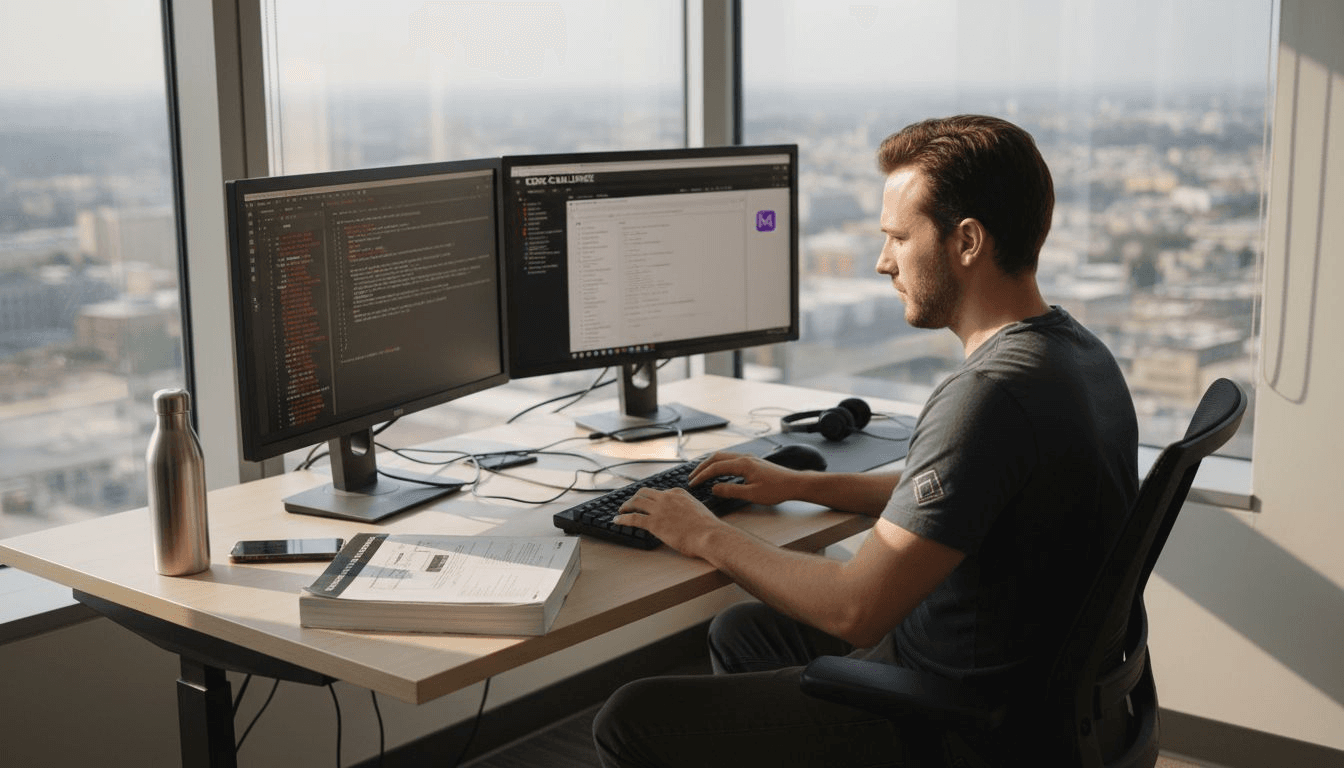

Nailing a technical interview often feels like solving a tough coding challenge under a spotlight. For job seekers everywhere, especially software developers, the rise of AI-driven interviewing systems means you prepare and perform under new rules. Knowing how these platforms evaluate coding, problem-solving, and communication skills is now just as essential as acing algorithms. This article breaks down key platform types, common myths, and how real-time feedback shapes your job search and interview readiness.
Table of Contents
- Defining Technical Interview Automation And Common Myths
- Types Of Automated Interviews And AI-Powered Platforms
- How Real-Time AI Assistance Works In Technical Assessments
- Key Features, Privacy Safeguards, And Legal Compliance
- Risks, Candidate Experience, And Comparing Alternatives
Key Takeaways
| Point | Details |
|---|---|
| Types of Platforms | Automated interview platforms vary in complexity, with options like rule-based, AI-enhanced, immersive, and gamified systems each serving different preparation needs. |
| Real-Time Feedback | AI-driven systems provide instantaneous analysis and feedback, allowing candidates to improve skills dynamically during practice sessions. |
| Privacy Considerations | Candidates should verify platforms’ privacy policies, ensuring data protection measures are in place before utilization. |
| Hybrid Preparation Approach | Combining AI systems with human interviews maximizes skill development and provides necessary validation and nuanced feedback before actual interviews. |
Defining technical interview automation and common myths
[Your complete section content here]
Types of automated interviews and AI-powered platforms
Automated interview platforms come in several distinct flavors, each designed to assess different skills and preparation levels. The variety spans from straightforward rule-based systems to sophisticated immersive experiences that mimic real interview conditions.
Core Platform Types
Modern AI-driven systems fall into four main categories:
- Rule-based platforms use predetermined questions and scoring criteria to evaluate responses consistently
- AI-enhanced systems combine structured questions with adaptive feedback based on your answers
- Immersive platforms use virtual reality or avatar-based simulations to create realistic interview scenarios
- Gamified systems turn interview prep into interactive challenges with scoring and progression mechanics
Each type serves a different purpose in your interview preparation guides journey. Some focus on initial screening efficiency, while others prioritize building your confidence through realistic practice.
AI-driven interviewing systems now assess coding, problem-solving, and behavioral skills through conversational AI and avatar-based simulations, providing adaptive feedback to improve your preparation.
Rule-based platforms work well if you prefer structured, predictable practice. They ask the same questions to all candidates, which means you can drill specific technical concepts repeatedly.
AI-enhanced systems adapt to your skill level. If you answer a coding question correctly, the next question becomes harder. This means you get personalized difficulty matching your actual abilities.
Virtual reality and immersive platforms create psychological realism. You’re sitting across from an avatar interviewer, making eye contact (simulated), and responding to non-verbal cues. This stress-tested preparation carries over to actual interviews.
Gamified systems turn repetition into engagement. Points, badges, and leaderboards keep you motivated during long study sessions. You compete against yourself or others while building skills.
Here’s how the main types of automated interview platforms compare:
| Platform Type | Best For | Key Advantage | Typical Limitation |
|---|---|---|---|
| Rule-based | Foundational skill practice | Consistent evaluation | Limited adaptability |
| AI-enhanced | Skill improvement | Personalized difficulty | May misjudge nuanced answers |
| Immersive | Realistic simulation | Psychological realism | Requires more setup/tech |
| Gamified | Motivation & engagement | Boosts sustained practice | May oversimplify scenarios |
What These Platforms Actually Do
Resume parsing, standardized questions, and real-time response evaluation form the backbone of most automated systems. When you upload your resume, the platform extracts key information—skills, experience, education—and customizes interview questions accordingly.
Conversational AI listens to your responses and evaluates them in real time. The system checks for technical accuracy, communication clarity, and problem-solving approach. Some platforms even assess your pacing and confidence level.
Real-time feedback is where platforms create value. Instead of waiting days for an interviewer’s notes, you get instant suggestions. This builds your interview skills faster than traditional methods.
Pro tip: Start with rule-based or AI-enhanced platforms to build fundamental skills, then move to immersive simulations once you’re confident—this progression prevents overwhelming yourself while steadily increasing difficulty.
How real-time AI assistance works in technical assessments
Real-time AI assistance transforms technical interviews from one-shot performances into dynamic learning experiences. The system listens, analyzes, and responds instantly—all while you focus on solving the problem at hand.
Here’s what happens behind the scenes when you’re working through a coding challenge or technical question.
The Live Analysis Process
Natural language processing and AI inference engines power the core functionality. As you speak or type your solution, the system transcribes your words, parses your code, and evaluates your approach simultaneously.

The AI doesn’t wait for you to finish. It processes information in chunks, building understanding as you articulate your thoughts. This continuous analysis means feedback can start appearing before you’ve fully completed your explanation.
What the System Actually Evaluates
Real-time assessment covers multiple dimensions:
- Technical accuracy — Does your code logic work? Are you using the right data structures?
- Problem-solving approach — Can you explain your reasoning clearly? Are you considering edge cases?
- Communication clarity — Are you articulating your thoughts logically? Do you ask clarifying questions?
- Adaptability — How do you respond when the interviewer challenges your approach?
- Confidence level — Does your pacing and tone suggest you know what you’re doing?
The system scores each dimension independently, then generates specific feedback targeting your weaknesses.
Real-time AI assistance enables whiteboarding tasks, immediate feedback, and interactive conversational agents that dynamically analyze your responses and provide constructive suggestions to improve how you articulate problems.
Immediate Feedback in Action
Traditional interviews give you feedback days later. Real-time systems show you suggestions within seconds. You might see prompts like “Consider mentioning space complexity” or “Try walking through an example with the input they provided.”
This immediate loop accelerates learning dramatically. You recognize patterns in your mistakes during the same session, not weeks later when you’ve moved onto the next company.
The system adapts based on your responses. If you nail algorithmic questions, it shifts focus to behavioral questions or system design. If you struggle with communication, it flags your explanations for improvement.
Why This Matters for Your Preparation
You’re essentially getting an experienced interviewer who never gets tired, never judges, and always explains what you did wrong. The psychological safety of practice reduces anxiety during real interviews.
When you sit across from an actual interviewer, you’re not starting from zero. You’ve already worked through dozens of scenarios with real-time feedback shaping your responses.
Pro tip: Record yourself during real-time AI practice sessions and review the playback—you’ll spot communication patterns you miss in the moment, letting you correct them before your actual interview.
Key features, privacy safeguards, and legal compliance
Modern AI-powered interview platforms balance powerful assessment capabilities with serious privacy and legal considerations. Understanding what these systems do—and what protections exist—helps you make informed decisions about using them.
Core Features That Drive Assessment
Top-tier platforms include several key capabilities:
- Adaptive questioning adjusts difficulty based on your answers, personalizing the challenge level
- Multimodal data processing analyzes your audio, video, text responses, and code simultaneously
- Intelligent dialogue management allows natural conversation flow, not rigid scripted questions
- Objective scoring uses standardized criteria across all candidates for fairness
- Real-time feedback identifies gaps immediately, not after the assessment ends
These features create a more realistic interview experience than static question banks. The system responds to your actual performance, making each assessment unique.
Privacy: What Actually Gets Recorded
Here’s where candidates often have misconceptions. Key privacy safeguards involve securing candidate data, ensuring confidential handling of video and audio inputs, and compliance with data protection laws such as GDPR and regional regulations.
Most reputable platforms don’t record your audio or video permanently. They process your responses in real time, extract the relevant information, then discard the raw files. Your actual words and face aren’t stored in databases.
Encrypted data streams and transparent consent mechanisms protect your information while enabling fair assessment across all candidates.
You should always verify a platform’s privacy policy before using it. Look for specific commitments around data deletion, encryption standards, and third-party access restrictions.
Legal Compliance and Bias Prevention
Compliance with global legal frameworks mandates transparent AI decision-making, consent mechanisms, and bias mitigation strategies to maintain fairness in hiring.
Employers using these systems must follow employment law and anti-discrimination regulations. The AI itself can introduce bias if not carefully designed—assessing cultural references you might not know, favoring certain accents, or penalizing communication styles that differ from the training data.
Responsible platforms use audit trails to track decisions, implement anonymized data analysis where possible, and regularly test for bias across demographic groups. Some even disable video analysis to prevent appearance-based discrimination.
As a job seeker, you have rights. You can request explanations for assessment decisions, challenge scores you believe are unfair, and expect transparent communication about how your data is used.
Pro tip: Before using any AI interview platform, request their privacy policy and ask specifically whether audio/video recordings are permanently stored—reputable companies should have clear, direct answers to this question.
Risks, candidate experience, and comparing alternatives
AI-powered interview systems deliver real value, but they’re not perfect replacements for human interaction. Understanding the tradeoffs helps you decide whether to use them and how to supplement them.
Real Risks You Should Know About
No technology is risk-free. Risks associated with AI technical interviews include potential technical glitches affecting conversational flow, candidate stress from non-human interaction, and challenges in fully replicating nuanced interviewer behavior.
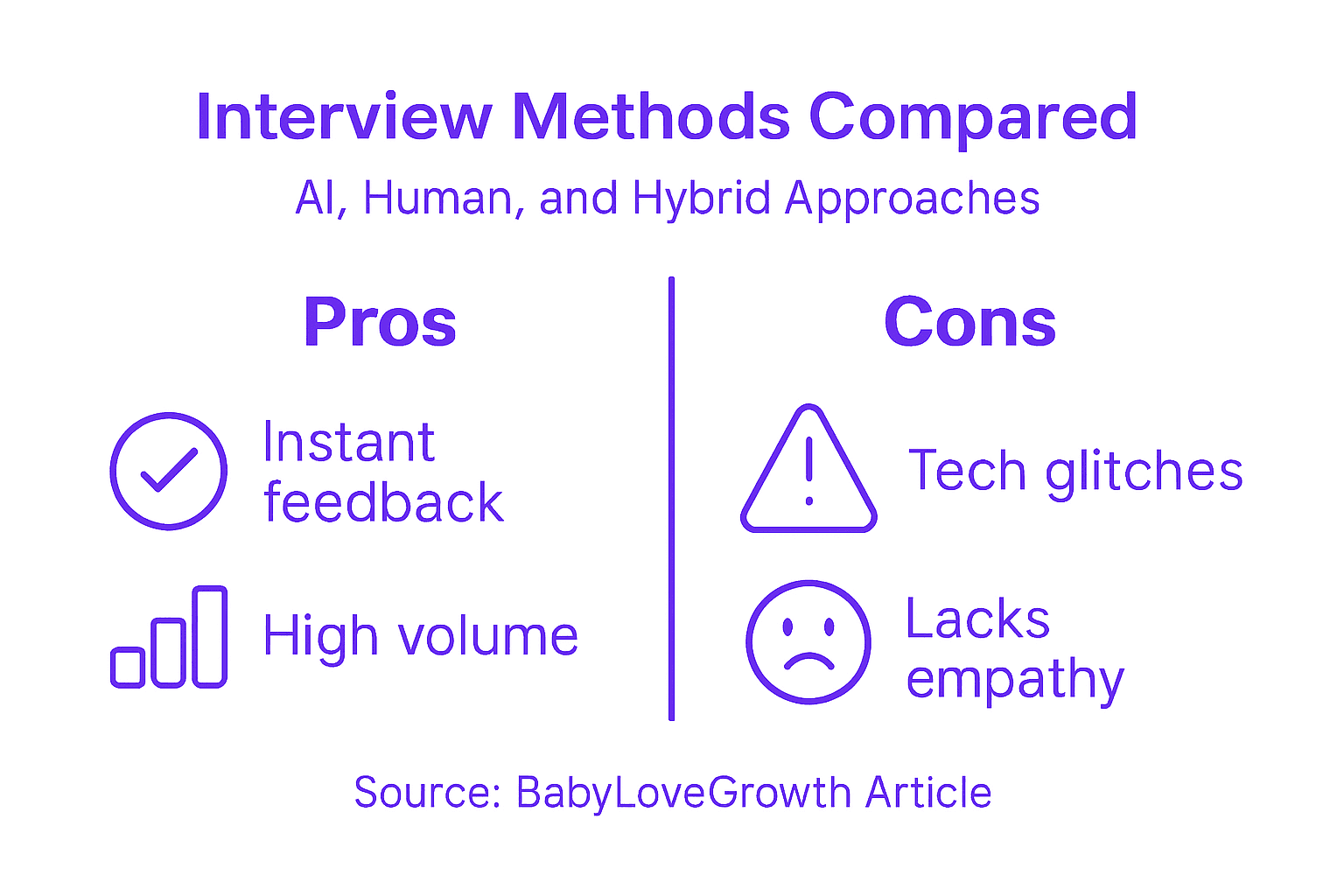
Technical hiccups happen. The system might misunderstand your accent, miss a code snippet you pasted, or lag when processing your response. These aren’t deal-breakers, but they can frustrate your practice.
Psychological stress differs too. Talking to a machine feels different than talking to a person. Some candidates find it liberating; others feel isolated or anxious. The pressure is real even without a human face watching.
AI also struggles with nuance. Interviewers pick up on hesitation, enthusiasm, and subtle context clues. Current systems focus on what you say, not how you say it.
How Candidate Experience Actually Differs
Experience varies dramatically based on platform quality. High-quality systems feel natural and confidence-boosting. Poor ones feel robotic and unhelpful.
Key factors that shape your experience:
- Feedback quality — Does the system explain why your answer was wrong?
- Conversational flow — Can you ask clarifying questions naturally?
- Response time — Does lag break your concentration?
- Personalization — Does it adapt to your skill level or feel generic?
- Realism — Does the interview feel like an actual technical interview?
Many candidates report that well-designed AI mock interviews significantly boost confidence. You practice dozens of scenarios without judgment, which transfers to real interviews.
Candidate experience is impacted by system design quality, feedback richness, and transparency in how AI makes decisions.
Comparing Your Options
You have three paths: pure AI, traditional human interviews, or hybrid approaches.
Pure AI systems offer unlimited practice, instant feedback, and zero judgment. Downside: they lack empathy and can’t replicate subtle interviewer behavior.
Traditional human interviews with mentors or professionals give you genuine feedback and human insight. Downside: they’re expensive, limited in quantity, and anxiety-inducing.
Hybrid approaches combine both. You practice with AI to build fundamentals, then do mock interviews with actual people before big interviews. This balances preparation volume with human validation.
Most successful candidates use hybrids. AI gets you to competence; humans validate that competence.
Use this table to decide when to use each interview practice method:
| Practice Method | Most Valuable When | Drawback to Consider | Best Used For |
|---|---|---|---|
| Pure AI system | Early rounds, quick skill checks | Lacks emotional nuance | High-repetition self-assessment |
| Human mock interview | Before real interviews | Limited availability, higher stress | Live feedback & nuanced advice |
| Hybrid approach | Building full readiness | Requires more planning | Balanced skills and confidence |
Mitigating Bias and Ensuring Fairness
If an AI system wasn’t trained properly, it perpetuates bias. Cultural references, accents, communication styles—all can skew results unfairly.
Responsible platforms test for bias across demographics, maintain audit trails of decisions, and allow candidates to contest scores. Use only platforms that transparently address these concerns.
Pro tip: Use AI systems for high-volume practice and skill building, then validate your readiness with 2-3 real mock interviews from experienced professionals before your actual technical interviews.
Enhance Your Technical Interview Success With Real-Time AI Support
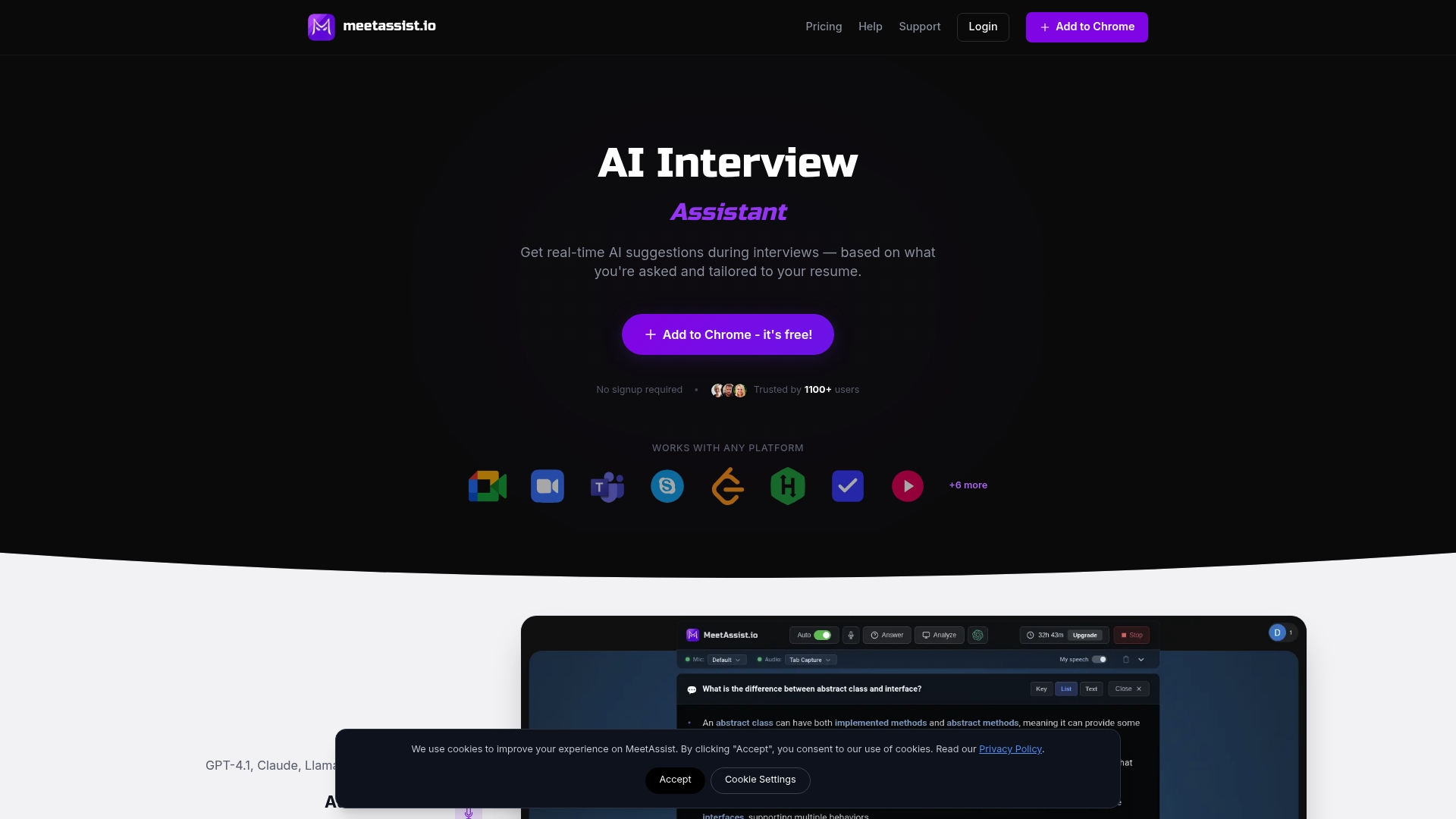
The article highlights the challenges of navigating automated technical interviews, especially the need for real-time feedback, personalized guidance, and privacy-sensitive tools that help you practice confidently. If you want to overcome painful moments like delayed feedback, unnatural conversational flow, or the fear of bias and technological glitches, MeetAssist is designed to empower you. By integrating seamlessly with platforms like Google Meet and Microsoft Teams, it listens and analyzes your responses instantly, offering AI-generated suggestions tailored to your resume and interview style.
With MeetAssist you get
- Real-time AI coaching during actual technical assessments
- Privacy-first design with Phone Mode to keep your data secure and invisible on screen
- Support for multiple AI models including GPT-4.1, Claude, and Gemini
- Flexible response styles including detailed explanations or the STAR method
Unlock your true potential for coding challenges, behavioral questions, and live interviews right now. Visit MeetAssist to start your risk-free journey, gain instant confidence, and experience how cutting-edge AI can make every technical interview smoother and more effective. Do not let hidden AI biases or opaque systems hold you back — take control of your career today with MeetAssist.
Explore how MeetAssist complements automated interview platforms and real-time AI assistance described in the article by visiting MeetAssist.
Frequently Asked Questions
What is technical interview automation?
Technical interview automation refers to the use of AI-driven systems and technologies to conduct and evaluate technical interviews. These platforms can assess candidates’ skills in real-time, providing immediate feedback on their responses and performance.
How do AI-powered interview platforms assist in candidate preparation?
AI-powered interview platforms help candidates prepare by offering personalized, adaptive feedback based on their performance. They simulate real interview conditions and can evaluate technical accuracy, problem-solving approaches, and communication clarity, allowing candidates to improve their skills dynamically.
What are the types of automated interview platforms available?
There are four main types of automated interview platforms: rule-based systems, AI-enhanced systems, immersive platforms, and gamified systems. Each type focuses on different aspects of interview preparation, such as foundational skill practice, personalized difficulty, psychological realism, or motivation through engagement.
How does real-time AI assistance improve the technical interview experience?
Real-time AI assistance enhances the interview experience by providing instant feedback, allowing candidates to recognize and correct mistakes during the interview. This ongoing analysis helps candidates articulate their thought processes and build confidence, making them better prepared for actual interviews.